


Can a Foreigner Buy a House in the USA? Requirements and Financing

Yes, a foreigner can buy a house in the United States. There is no citizenship or residency requirement to purchase US real estate, and no law restricts foreign nationals from owning property in almost every state, Florida and Texas included. What foreign buyers actually need is a financing path built for their situation, since most conventional mortgage programs assume a US credit history and US income that international buyers don’t have.
No Doc Mortgage: What It Is and Who Actually Qualifies Cargado

A “no doc” mortgage doesn’t mean no documentation at all — it means no income documentation in the traditional sense of pay stubs, W-2s, or tax returns. Lenders still verify credit, assets, the property, and the borrower’s identity; what changes is how income gets confirmed, usually through bank statements, a lender’s cash flow analysis of the property (for investment purchases), or the borrower’s asset balances.
Asset Depletion Loans: Using Assets as Income to Qualify

An asset depletion loan lets a borrower qualify for a mortgage using savings, investments, and retirement accounts as income, instead of pay stubs or tax returns. The lender divides the borrower’s total qualifying assets by a set number of months — commonly 360, matching a 30-year term — to produce a monthly income figure used in underwriting.
How Self Employed Buyers Qualify for a Mortgage in Florida

Self-employed borrowers in Florida can qualify for a mortgage using bank statement loans, which calculate income from 12 to 24 months of bank deposits instead of tax returns. This makes homeownership and investment property financing possible for business owners, freelancers, and consultants whose tax returns show deductions that lower their qualifying income, even when their actual cash flow supports a mortgage comfortably.
The Great Capital Migration: Who’s Buying Miami’s Pre-Construction
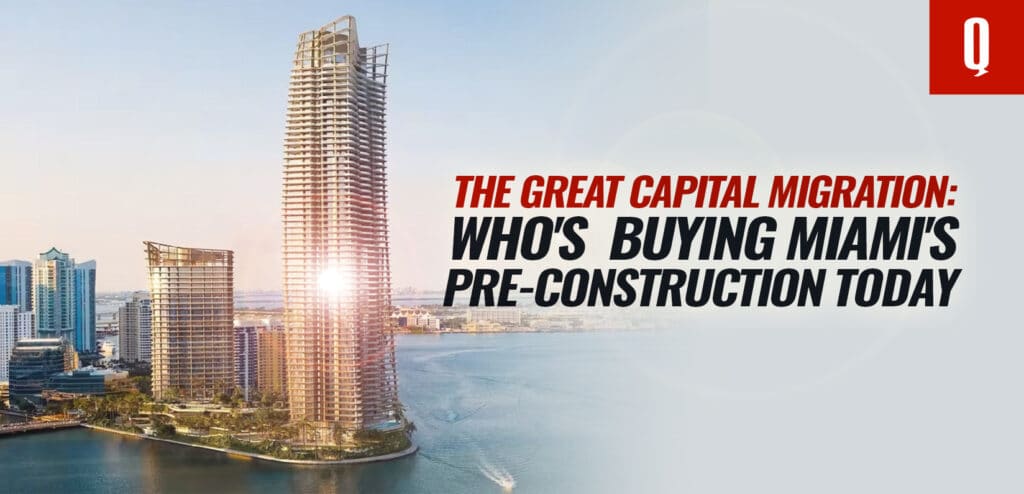
Walk into a pre-construction sales center in Brickell or Edgewater today, and you’ll notice something quickly: the conversations happening across the room aren’t in one language, and the buyers signing contracts aren’t shopping for a vacation home. They’re moving capital. For a growing share of Latin America’s business owners, professionals, and families, a pre-construction unit in Miami isn’t just real estate. It’s a financial strategy.
This is the story behind that strategy: who’s actually buying pre-construction in Miami right now, why real estate has become the preferred vehicle for protecting wealth across the region, and what it means for realtors and investors positioned to serve this market.
Call it what industry analysts increasingly are: a great capital migration, a sustained, structural movement of Latin American wealth into U.S. dollar-denominated, hard assets. It isn’t driven by a single election cycle or currency shock. It’s the accumulation of years of instability across multiple countries at once, channeled into one of the few asset classes that offers both a tangible store of value and a livable, visitable, occasionally rentable outcome.
The Story Behind QKapital: Two Partners, One Mission to Open U.S. Real Estate to the World
Every real estate transaction eventually comes down to trust, between a buyer and a realtor, between a borrower and a lender, and between an investor and the market they’re putting capital into. QKapital was built around that idea more than two decades ago, with a specific focus on a group of buyers traditional mortgage lending had largely ignored: foreign nationals investing in U.S. real estate.
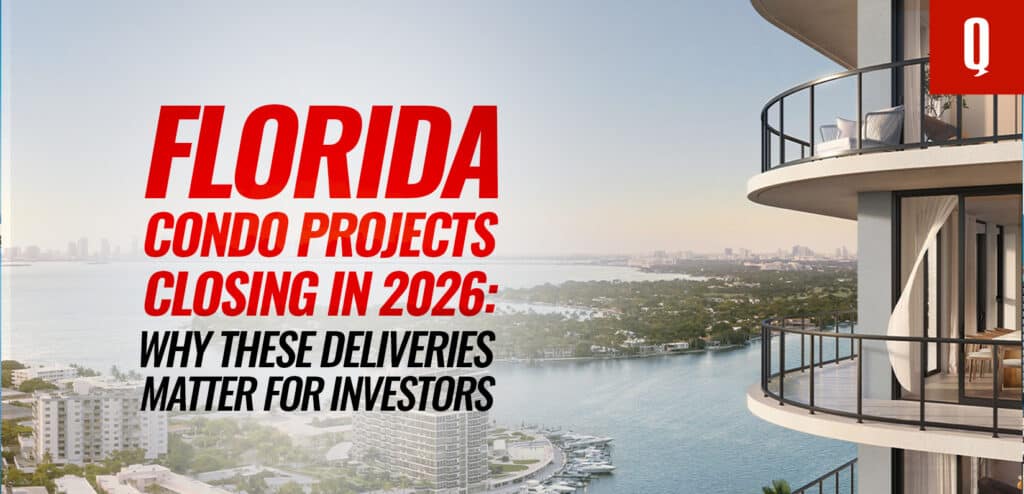
Florida Condo Projects Closing in 2026: Why These Deliveries Matter for Investors
Florida’s pre-construction condo pipeline is entering one of its busiest delivery windows in years. Across Miami and South Florida, a wave of towers that broke ground during the pre-pandemic and pandemic-era buying surge are now reaching completion, turning years of deposits and anticipation into actual closings.
For realtors and investors, this delivery wave is more than just a construction milestone. Closings trigger financing decisions, valuation resets, and rental market shifts that ripple across the surrounding submarket. Here’s a look at some of the notable projects closing across Florida this year, and why each one matters.
Florida and Texas Real Estate Outlook: What the Rest of 2026 Looks Like for Investors

Halfway through 2026, the data on Florida and Texas real estate is telling a consistent story: both states are moving into more balanced, buyer-favorable conditions after several years of tight inventory and rapid appreciation. For investors and realtors, that shift changes both the risks and the opportunities heading into the back half of the year.
Market Corrections Create Opportunities: How Florida Real Estate Investors Can Prepare in 2026
Florida’s housing market has shifted noticeably over the past couple of years. Inventory has grown in several metros, price appreciation has cooled from its post-pandemic pace, and headlines have been quick to frame every data point as a warning sign. For experienced investors, though, this phase of the cycle tends to read very differently: not as a reason to sit out, but as a period worth preparing for.
This article breaks down what a market correction actually means, why fundamentals matter more than headlines, and how Florida investors and their realtors can position themselves before the best opportunities appear.
Florida’s Condo Insurance and Reserve Crisis: What It Means for Investor Financing
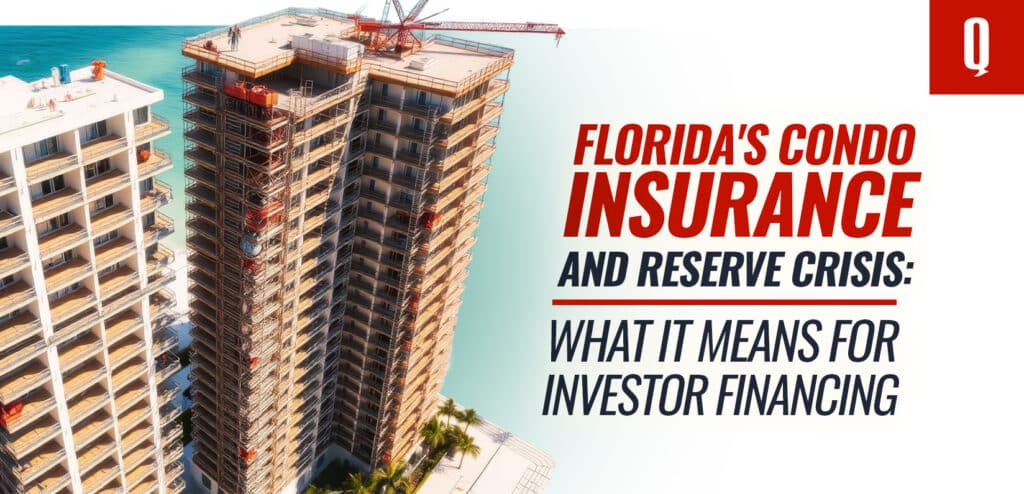
Florida’s condominium market is going through the most significant regulatory shift in decades, and it’s reshaping how investors buy, hold, and finance condo properties across the state. Rising insurance costs, mandatory structural reserve funding, and tighter lending guidelines have converged into what many in the industry are now calling a full-blown affordability and financing crisis for condos.
For realtors and investors who built their strategy around condo units as accessible, cash-flowing rental properties, this shift changes the math. Understanding what’s actually happening, and how it affects condo financing Florida, is now essential to advising clients accurately in 2026.